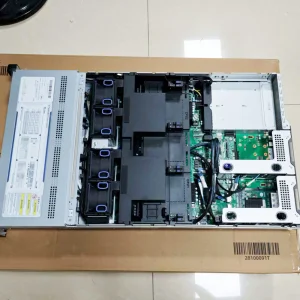
Deploy high-performance compute and switching nodes backed by premium optical interconnects.
Analyzing market drivers, technical evolution, and the crucial intersection between high-performance computing and optical cabling.
The global telecommunication landscape is undergoing a monumental shift. As hyperscale data centers, 5G wireless rollouts, and latency-critical Artificial Intelligence (AI) computation clusters accelerate, the physical layer—primarily optical fiber cables—acts as the foundational architecture. High-performance GPU architectures, such as those running modern large language models, require optical fiber backbone cabling to achieve the low latency and high bandwidth throughput essential for non-blocking fabric configurations.
In this comprehensive whitepaper, we dissect the capabilities of the world’s leading optical fiber manufacturers and examine how advancements in fiber technology support hardware deployments. From single-mode fiber (SMF) optimization to multi-core transmission schemes, we highlight the technical roadmaps driving the industry.
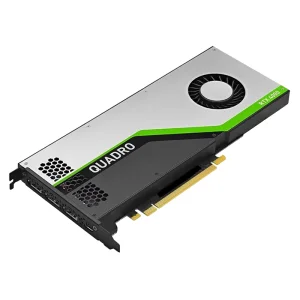
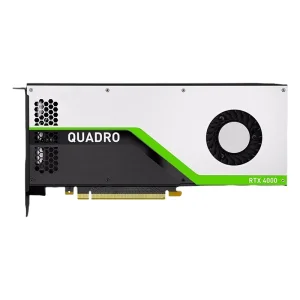
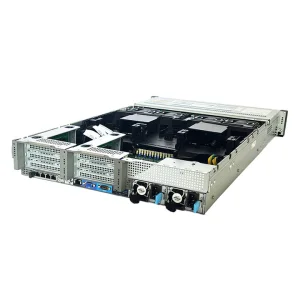
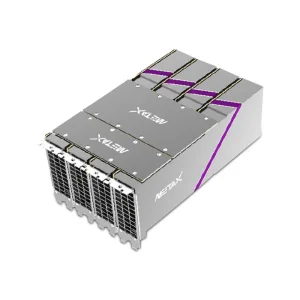
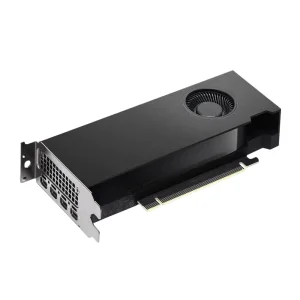
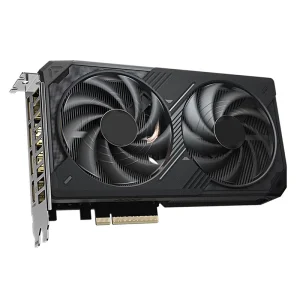
Modern data pipelines demand a seamless synergy between processing nodes and transmission media. High-performance hardware, such as the NVIDIA RTX 4000 Ada and enterprise-level GPU servers, process massive datasets in parallel. However, computing clusters are only as fast as their interconnects. Using traditional copper wiring limits transfer speeds and distance; optical fiber infrastructure solves this bottleneck by using light-wave propagation to carry terabits of data per second across data-center fabrics with negligible signal attenuation.
Over 85% of modern hyper-scale data centers rely on ultra-high-density MTP/MPO optical fiber systems to interconnect storage clusters, enabling rapid reading and writing processes.
By implementing ITU-T G.657.A2 bend-insensitive fibers, network engineers can routing cables in tight enclosures without suffering attenuation penalties.
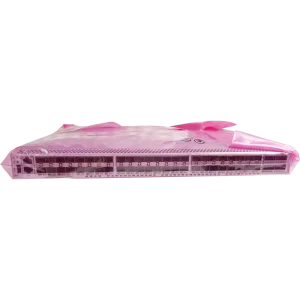
Low-latency optical switches connect server nodes, enabling distributed computing systems to scale infinitely without network latency bottlenecks.
The authoritative list of global suppliers driving optical glass and cabling innovation.
Prysmian Group is the undisputed world leader in the energy and telecom cable systems industry. With a strong focus on sustainability and technical innovation, they produce a vast range of optical fibers including Bend-Insensitive Fibers (BendBrightXS) which are critical for high-density FTTH applications. Their global footprint ensures that tier-1 telecom operators and hyperscale data centers receive localized support and short lead times.
As the inventor of the first low-loss optical fiber in 1970, Corning remains at the absolute cutting edge of glass science. Famous for their SMF-28® Ultra and ClearCurve® optical fibers, Corning's solutions are the benchmark for quality, reliability, and ease of splicing. They serve sectors ranging from aerospace and telecommunications to cloud data centers utilizing high-bandwidth optical cables.
YOFC is a massive powerhouse in preform, optical fiber, and optical fiber cable production. Offering complete vertical integration, they deliver competitive price-to-performance solutions globally. Their G.654.E ultra-low-loss fiber is highly optimized for long-haul transmission and high-speed data links up to 400G and 800G, making them a preferred provider for heavy telecom backbones.
Known for exceptional manufacturing precision, Sumitomo Electric produces high-grade optical fibers, fusion splicers, and optical components. Their PureBand® single-mode fiber series and multi-fiber ribbon technology are widely deployed across metropolitan and enterprise networks. Their specialized Z-Plus Fiber™ series features ultra-low attenuation for submarine networks.
Furukawa Electric operates globally, notably through its subsidiary OFS, a key manufacturer of optical fibers and specialty fiber products. Their EZ-Bend® cabling solutions are designed to endure extremely sharp bends without signal degradation. Furukawa plays a major role in developing technologies for data center interconnects (DCI) and industrial optics applications.
Hengtong is a major international enterprise offering integrated services in optical fiber networking and power grids. They produce high-quality single-mode, multi-mode, and specialty optical fibers, as well as submarine cabling networks that connect entire continents. Their global supply chain network extends across Europe, South America, and Southeast Asia.
Fujikura is internationally recognized not only for its premium optical fibers but also for its world-class splicing machines and optical connectivity solutions. Their Spider Web Ribbon® (SWR) technology allows for ultra-high-density fiber counts inside cables while keeping them lightweight and flexible, dramatically simplifying installation in congested municipal conduits.
While CommScope is highly regarded as a connectivity and structured cabling supplier, their optical fiber infrastructure portfolio—featuring the Systimax® and Netconnect® brands—is a standard for modern enterprise networks. They excel in providing end-to-end optical fiber networks, including patching panels, MPO cassettes, and intelligent infrastructure management software.
Nexans is a global player in the transition to renewable energy and advanced data communications. Their LANmark-OF® optical fiber solutions are deployed widely in campuses, data centers, and industrial automation networks, ensuring maximum safety, fire resistance, and reliable optical links under demanding environmental conditions.
STL is a leading integrator of digital networks, specializing in optical fiber preform, fiber manufacturing, and network software. With plants in India, Europe, and the US, STL is actively deploying 5G-ready optical networking solutions. Their Stellar™ fiber is designed to be backward compatible with existing legacy networks while boasting zero bend loss characteristics.
From metropolitan networks to high-density server racking, custom optical fiber infrastructure is essential.
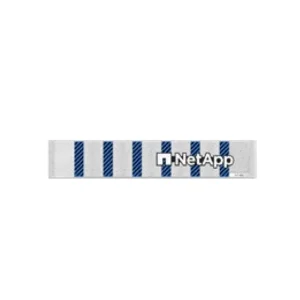
Different application environments demand dedicated fiber formulations. For instance, in municipal networks, single-mode fiber (SMF) conforming to ITU-T G.652.D is the standard due to its zero-dispersion wavelength around 1310 nm, offering low attenuation across the entire C-band (1530–1565 nm). Conversely, local area networks (LANs) and storage area networks (SANs) that connect arrays like the NetApp AFF A30 All Flash Storage utilize multi-mode fiber (OM3, OM4, or OM5) to support high-speed vertical-cavity surface-emitting lasers (VCSELs) over distances up to 150 meters.
| Fiber Type | Core/Cladding Diameter | Optimal Wavelengths | Primary Industrial Use Case |
|---|---|---|---|
| Single-mode (OS2 / G.652.D) | 9 / 125 µm | 1310 nm & 1550 nm | Long-haul telecommunication backbones & Metropolitan Area Networks (MAN) |
| Bend-Insensitive (G.657.A2) | 9 / 125 µm | 1310 nm & 1550 nm | FTTH access network drop cables and tight data-center patch panels |
| Multi-mode (OM4) | 50 / 125 µm | 850 nm & 1300 nm | Data center server interconnections and local area enterprise networks |
| Wideband Multi-mode (OM5) | 50 / 125 µm | 850 nm to 953 nm | Short-wavelength division multiplexing (SWDM) for 100G/400G data links |
Industry Expertise
Product Traceability
Quality Certified
Environmental Standard
Underpinning physical infrastructure with traceable manufacturing processes and certified QA/QC.


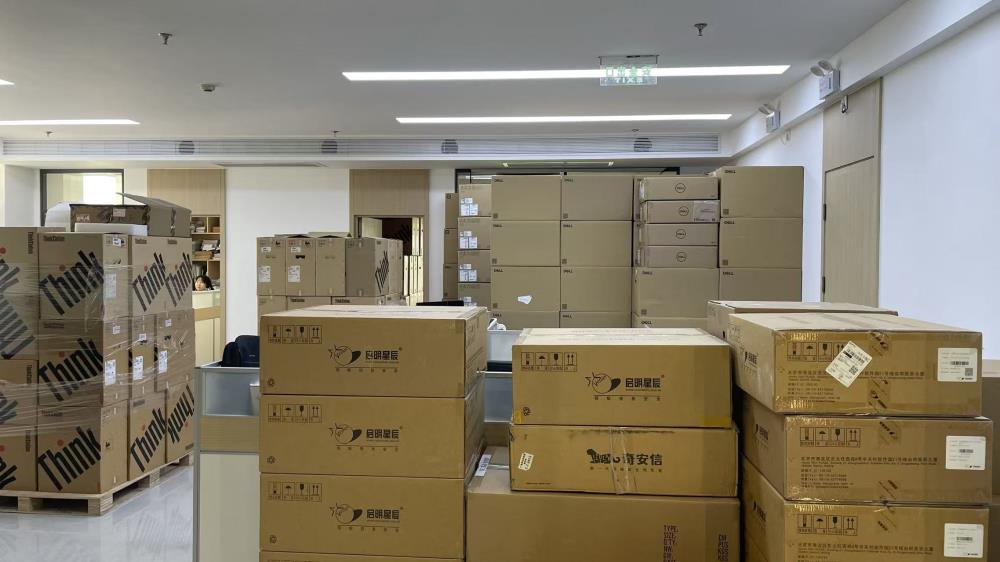
Scaling physical infrastructure to match next-gen AI processing units and multi-terabit bandwidths.
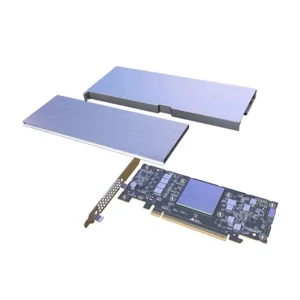
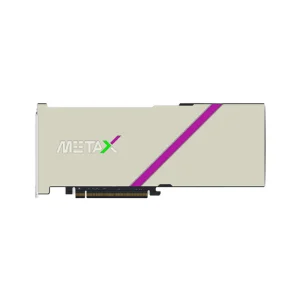
As microchip manufacturing processes push the physical boundaries of silicon, parallel processing via multiple high-bandwidth graphics interfaces like GDDR7 GPU modules demands equal innovation at the connectivity level. We are transitioning from traditional dense wavelength division multiplexing (DWDM) toward Space Division Multiplexing (SDM), incorporating multicore and few-mode fibers within single glass claddings.
Key areas of active R&D among the top global manufacturers include:
Expert technical insights regarding optical fiber procurement and deployment.
Ensure server infrastructure has the power, graphic computation, and networking capabilities to scale operations.
 Aiserver Manufacturer